
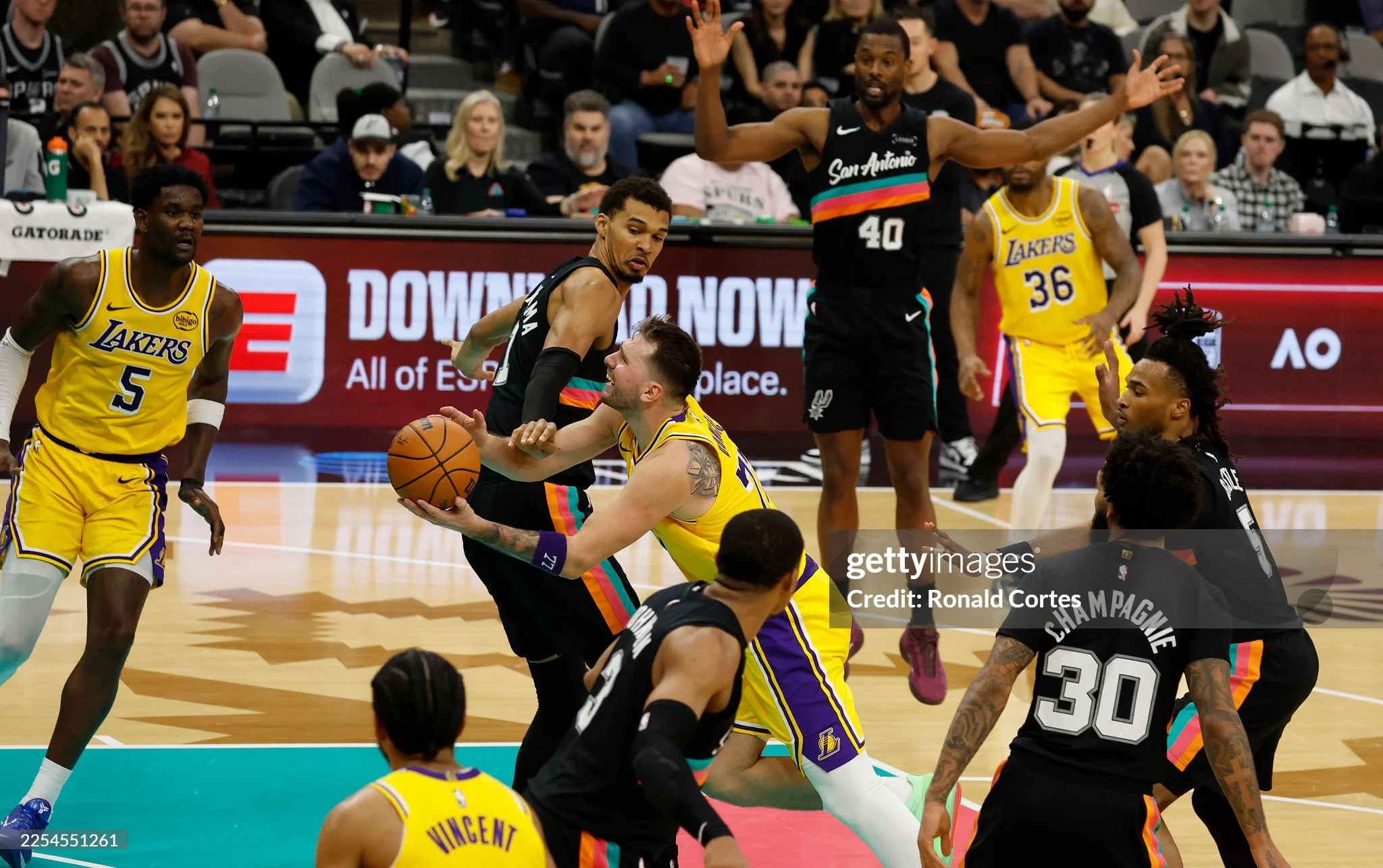
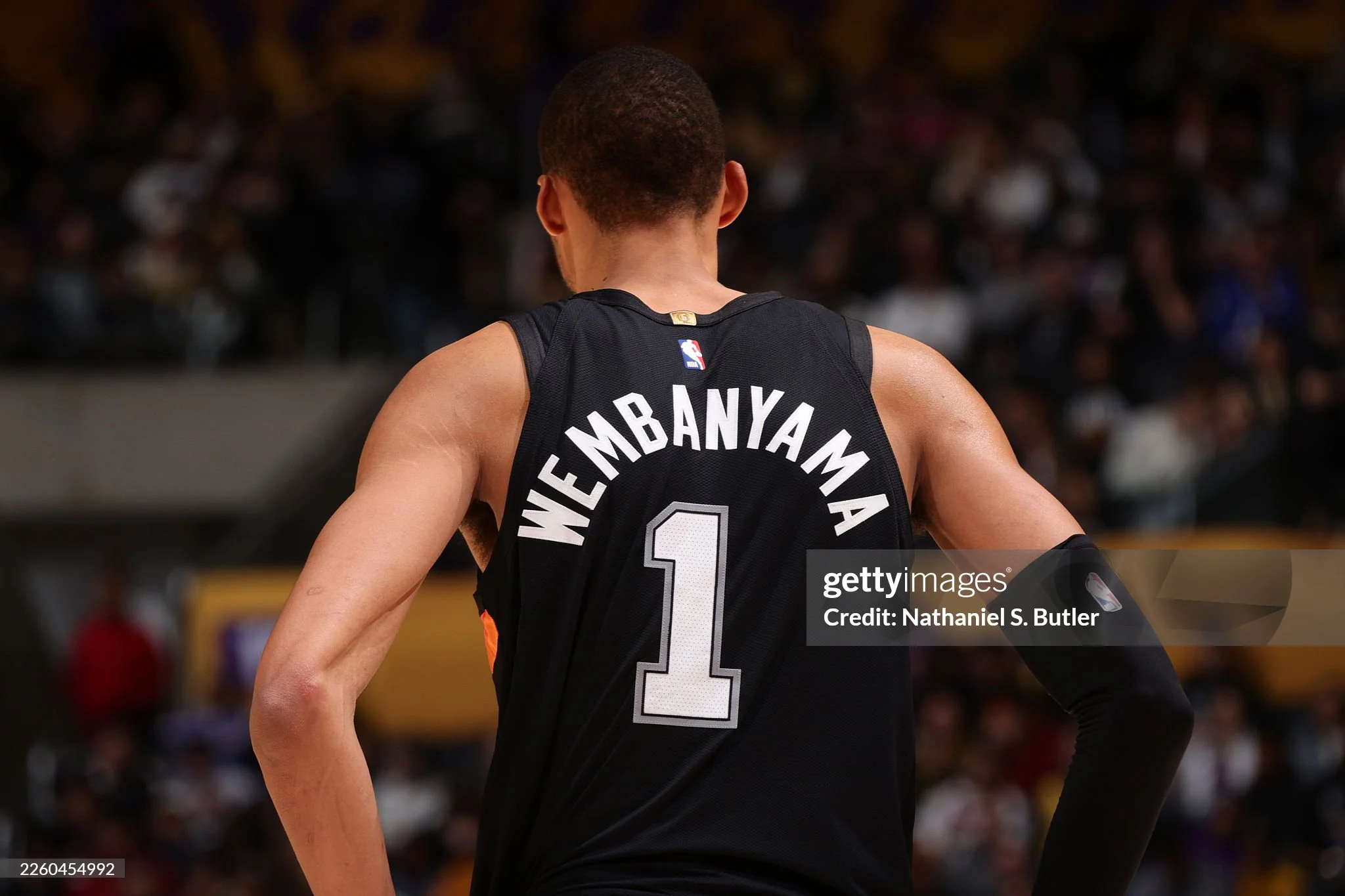
The Los Angeles Lakers rested LeBron James on the second night of a back-to-back, and the result was not just a loss — it was a clear diagnostic test of where this roster truly stands. San Antonio’s 107–91 win was less about what the Spurs did well and more about what the Lakers simply do not have when LeBron is unavailable.
Luka Dončić delivered a superstar performance, finishing with 38 points and 10 assists, but the rest of the night raised uncomfortable questions for a team with championship aspirations. When Dončić sat, the Lakers’ offense collapsed entirely. That is not a margin-of-error issue. It is a structural one.
Context Matters: Why This Game Was More Than a Scheduled Loss
Yes, this was a back-to-back.
Yes, LeBron is 41 and load management is unavoidable.
Yes, Austin Reaves, Rui Hachimura, and Adou Thiero were also out.
But dismissing this result as a schedule loss misses the larger picture.
This game functioned as a stress test of roster depth, offensive sustainability, and lineup flexibility — all areas that become decisive in the postseason. What the Lakers showed in San Antonio is that their current construction cannot survive even short stretches without elite shot creation on the floor.
That reality matters far more than the final score.
Watching the Full Game Reveals the Real Issue
Looking at the box score alone, one might assume this was simply a cold shooting night. That would be misleading.
In my view, the defining issue was not efficiency — it was functionality.
When Dončić rested for nearly six minutes in the first half, the Lakers failed to score. Not struggled. Not dipped. Completely stalled. There was no secondary action, no pressure on the rim, no consistent advantage creation.
This does not show up cleanly in traditional stats, but watching the possessions makes it obvious: the Lakers had no offensive identity without Luka on the floor.
The Numbers Behind the Dependence on Luka Dončić
The reliance was extreme even by superstar standards.
- Dončić accounted for 41.7% of the Lakers’ total points
- He generated 62.5% of the team’s assists
- The team’s offensive rating dropped off a cliff the moment he went to the bench
This level of dependence is not sustainable over an 82-game season, let alone a playoff run where defenses are built specifically to exhaust primary creators.
The Lakers were not running a system in those non-Luka minutes. They were surviving possessions.
Why the Bench Failed to Stabilize Anything
Gabe Vincent and Nick Smith Jr. struggled to create separation or force defensive rotations. Marcus Smart, while valuable defensively, was unable to consistently generate quality looks for others in a half-court setting.
This is where the absence of LeBron and Reaves was felt most — not just in scoring, but in organization. There was no one capable of slowing the game down, manipulating coverages, or creating an advantage late in the shot clock.
For a team that views itself as a contender, that is a red flag.
JJ Redick’s Rotation Wasn’t the Problem
It would be easy to pin this on coaching, but that would be unfair.
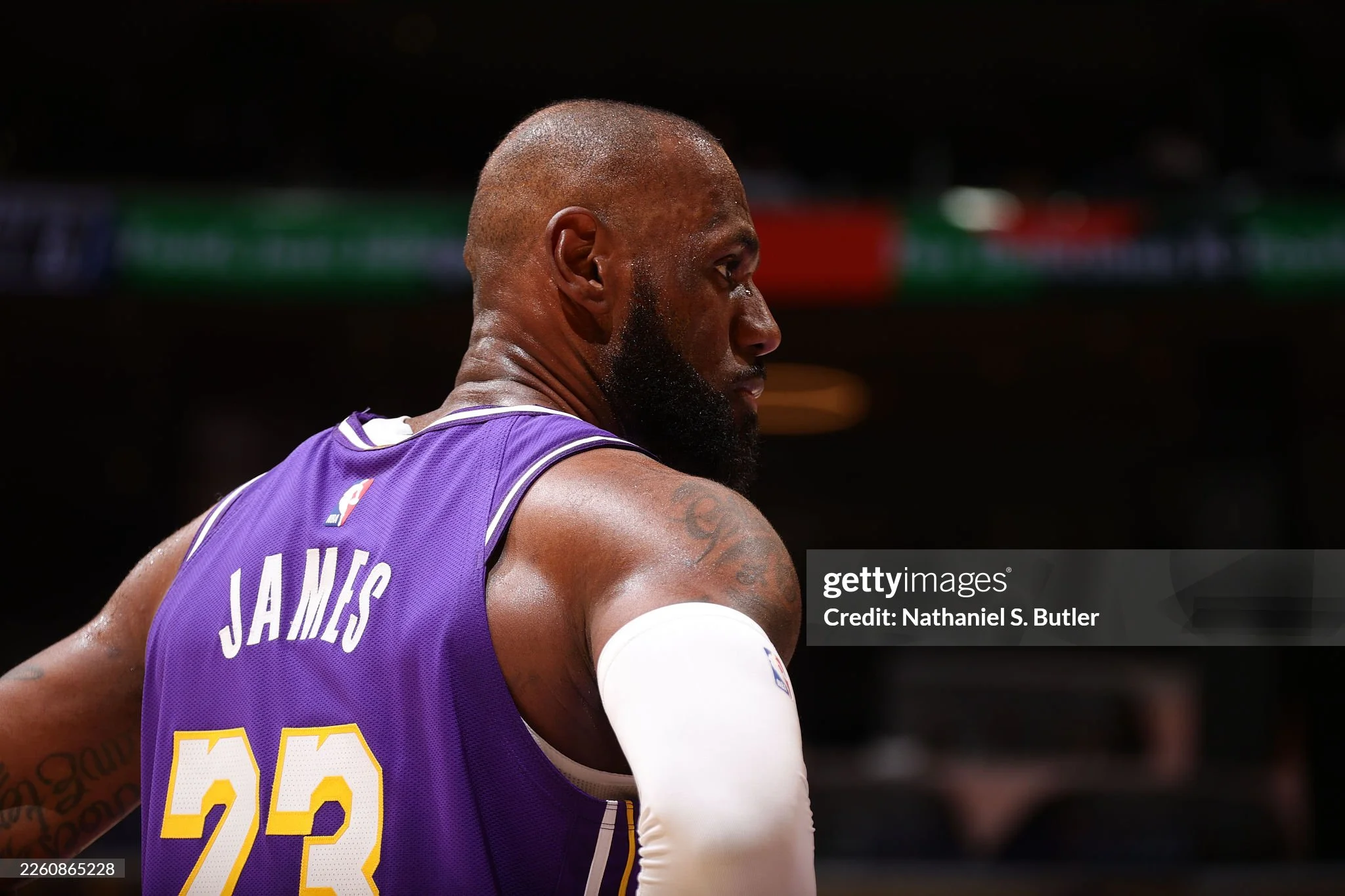
JJ Redick is managing a fragile balance: preserving LeBron’s health while extracting maximum value from a top-heavy roster. Sitting LeBron on the second night of a back-to-back is not controversial. It is necessary.
The problem is that the roster behind the stars does not allow for flexibility. Redick cannot stagger lineups creatively if there is no reliable offensive engine beyond the top two players.
This is not a tactical failure. It is a personnel limitation.
Depth Issues That Have Been Building All Season
This game did not create new concerns. It confirmed existing ones.
Even at 23–12 and sitting comfortably in the top six of the Western Conference, the Lakers are flirting with a negative point differential. That is unusual for a team with legitimate title ambitions.
It reflects a pattern:
- Dominant in clutch moments
- Vulnerable over long stretches
- Over-reliant on stars to erase structural flaws
Against elite teams, those flaws become magnified.
Why This Matters for the Playoff Picture
In the playoffs, rest games disappear. But so does margin for error.
If LeBron misses time — even briefly — or if Luka faces aggressive trapping schemes, the Lakers must be able to survive non-superstar minutes. Right now, they cannot.
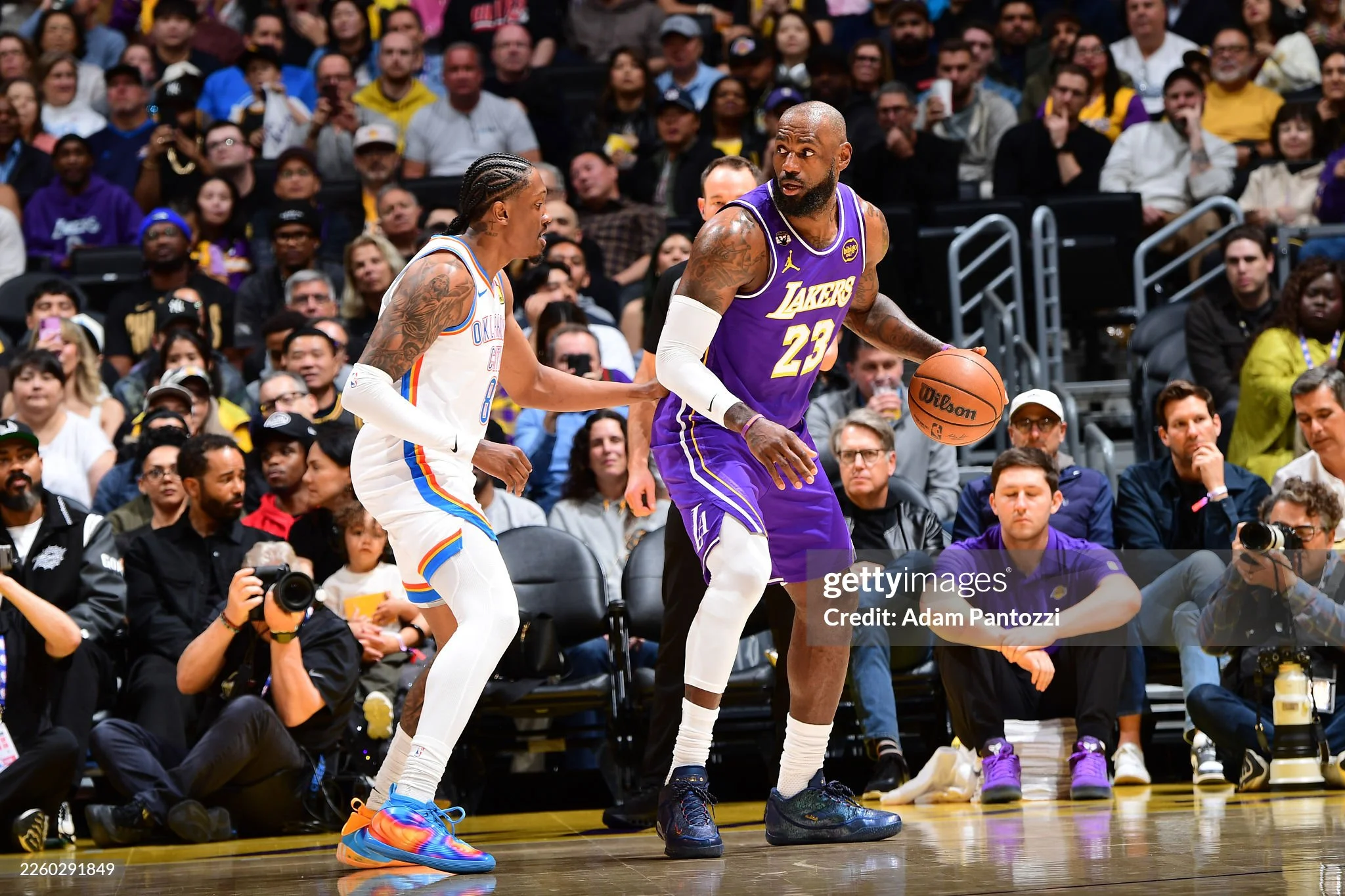
You cannot win four playoff series playing seven reliable players and hoping your stars solve everything. That model fails against teams like Denver, Oklahoma City, and Boston, who can sustain pressure across multiple lineups.
This is not about one loss in January. It is about repeatability in May.
The Trade Deadline Reality Check
The February 5 trade deadline is approaching, and the front office faces a difficult reality.
The Lakers need:
- A reliable secondary ball-handler
- More frontcourt stability
- Additional wing depth capable of defending and spacing the floor
They do not have the assets to solve all three.
With only one first-round pick realistically available in trade discussions, Rob Pelinka will have to prioritize. That makes every evaluation game like this one critical.
In San Antonio, the evaluation was clear: the current bench cannot support championship-level minutes.
Why a “3-and-D Wing” Alone Won’t Fix Everything
Fans have been calling for a traditional 3-and-D wing, and while that would help, it is not a complete solution.
This roster also lacks:
- A backup guard who can run offense
- A consistent interior presence behind Deandre Ayton
- Lineup versatility when one star is off the floor
One trade will not turn this into a perfect roster. But one wrong trade could waste the final elite years of both LeBron James and Luka Dončić.
What This Loss Should Tell the Front Office
If you watched the entire game, one thing became obvious: this team’s floor is lower than its record suggests.
The Lakers are excellent when everything aligns. They are fragile when it doesn’t.
That is not a criticism of effort or coaching. It is an assessment of roster construction.
The Spurs did not need a great shooting night to win comfortably. They simply needed the Lakers to be who they
Join the Discussion
0 Comment(s)
Login to join the discussion: